
You unpacked memories, photos, and dirty socks, but your child seems quieter than usual. Are the laughs gone? Mood low? It’s not just missing camp, it may be post summer camp depression, also called campsickness.
It’s a real emotional dip after the structure, friendships, and magic of camp fade. This guide is for parents, teens, counselors, and kids who want actionable ways to move forward.
Quick Answer – How to Overcome Post-Camp Depression?
To overcome post-camp depression, validate your child’s feelings and implement a gentle re-entry plan that focuses on reconnection and routine.
Prioritize rest, encourage contact with camp friends, and recreate small camp rituals at home to bridge the gap between the intense camp environment and daily life.
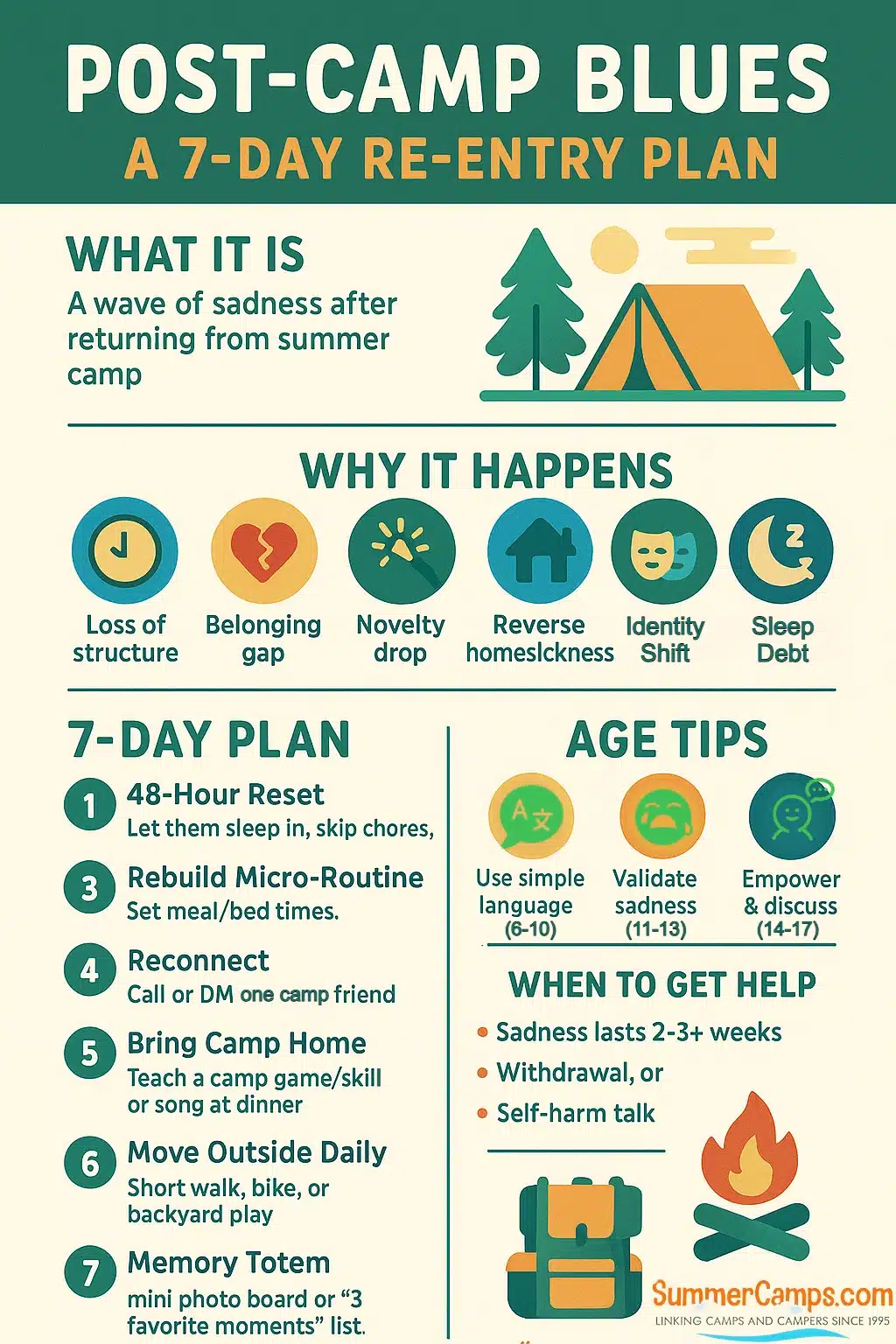
What Is Post‑Camp Depression?
Post-camp depression, sometimes called the “camp comedown,” is a real emotional dip after kids return home. You might notice your child seems down, irritable, unmotivated, or just not quite themselves. They may talk about missing friends, lose interest in usual routines, or have trouble sleeping.
For most kids, it passes within a few days to two weeks. The shift back to normal life feels jarring after days filled with bunkmates, campfires, and nonstop connection. Sleep debt, emotional whiplash, and that sudden quiet at home all play a role.
If your child’s mood seems to spiral, lasts more than a couple of weeks, or includes red flags, like withdrawal, hopelessness, or talk of self-harm, do not wait. Reach out to a pediatrician or licensed therapist. Most of the time, it really is just a short reset. But sometimes, kids need extra support to process the emotional weight camp leaves behind.
Why It Happens

Lots of reasons cause this “back to normal life” crash. Understanding them helps.
- Loss of structure: Every day at camp has a schedule: meals, activities, chores. Back home, hours stretch.
- Belonging gap: Camp often feels like its own family. Leaving that built‑in social world hurts.
- Dopamine drop / novelty fade: New experiences, friendships, surprises at camp fire up excitement. Once gone, flat feelings follow.
- Reverse homesickness or grief: You think homesickness is only at camp. But returning home can bring grief for what was.
- Sleep debt / schedule pendulum: Early rises, late nights, lots of physical activity. Crash when you return to daily routines.
- Identity shift: Teens in particular may feel different after camp. They may have taken on roles (leader, counselor in training, etc.), and home doesn’t offer the same roles or recognition.
- Social media / comparison pull: Photos, posts remind campers of magic moments. Comparing with “real life” routines back home can deepen the slump.
According to the ACA, a study showed that nearly 96% of campers spending two weeks or more at residential camps reported feeling homesick at least one day of camp. That kind of emotional intensity makes the comedown sharper.
7‑Day Re‑Entry Plan — SummerCamps.com Post Depression Framework
Here’s a gentle week‑long plan to help your child, or you, bridge the gap from camp back to everyday life.
| Day | Focus | What to Do |
| Day 1‑2: Reset | Rest and decompress | Let your child sleep in if possible. Skip chores or tasks. Let them share camp stories on their own terms. |
| Day 3: Micro‑Routine | Reintroduce structure | Fix regular meal times, one fun activity (art, music), limited screen time. |
| Day 4: Reconnection | Stay socially tied | Encourage one call or message to a camp friend or counselor. Maybe mail a “miss you” note. |
| Day 5: Skill Transfer | Bring camp home | Teach something learned at camp: a game, skill, song, craft. Helps camp memories feel alive. |
| Day 6: Future Focus | Goal or interest | Help child pick something connected to camp interests: join a club, volunteer, or sign up for dance or sports. |
| Day 7: Memory Totem | Reflect & cherish | Photo album, scrapbook, or gratitude list of “three camp moments I loved.” Keeps positive feelings front. |
Parent Playbook by Age

Kids at different ages experience post camp depression differently. These age‑tailored tips help you respond well.
- Ages 6‑10: Use simple language. Say things like, “Missing camp shows you had a great time.” Give extra reminders of home comfort (favorite pillow, snack). Try a “camp at home” craft or tent‑inside‑living‑room night. Early bedtime helps reset sleep after camp.
- Ages 11‑13: They often feel more awkward. Validate their feelings. Avoid dismissing sadness. Let them decide how they want to reconnect with camp memories (journaling, sharing photos). Monitor screen marathon behaviour, screens often amplify longing and comparison. Encourage peer time without pressure.
- Ages 14‑17: Teen feelings are deeper. They may feel identity ripple effects. Collaborate on goals: maybe a fitness challenge, summer job, or mentorship. Let them lead: let them choose how they want to re‑enter “normal life.” Help with sleep hygiene, maintain social circles, encourage volunteering or clubs that echo camp. They need autonomy plus support.
Teen Self‑Help Toolkit
Teens can use their own tools. These are small, doable, and help build momentum.
- 10‑minute mood lifts: a short walk, doodling, listening to a camp playlist.
- “Do one hard thing” rule: reach out to someone you miss or write a letter you don’t send.
- Reconnection script: “Hey, I miss camp. FaceTime Thursday?” sets a plan.
- Journal prompts: list 3 wins from camp, 1 skill you want to keep using, 1 plan for next week.
- Physical movement: nature walks, yoga, or even just jumping on a trampoline. Sweat helps mood.
Stay Connected

Keeping ties to camp culture helps soothe the transition home.
- Use group chats wisely: set time windows, kind rules. Share pictures, inside jokes.
- Plan monthly reunions or Zoom calls with camp friends or staff.
- Send thank you notes to counselors or camp mates. Helps affirm positive feelings.
- Mentor or help new campers with what you’ve learned at camp. Passing it on helps the mood.
- Countdown to the next camp season with positive rituals but without dwelling on lost moments.
Recreate the Best of Camp at Home
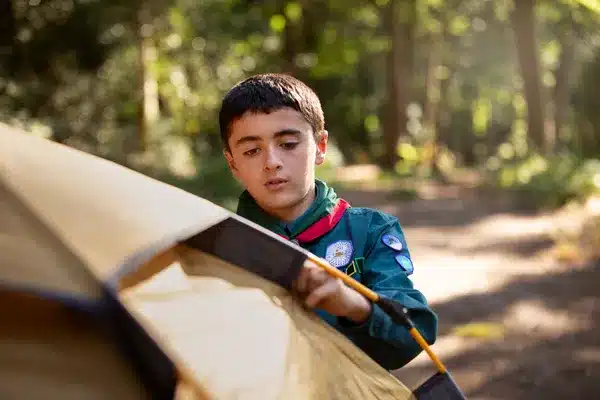
Camp does not have to end just because summer did. You can bring little pieces of it back into daily life. These small traditions help kids stay connected to the memories and magic they made.
Try these ideas at home:
- Start a Friday campfire ritual. Light a fire in the backyard, share highs and lows from the week, and sing a few camp songs.
- Set up a “badge board.” Let kids earn their own awards for kindness, courage, or trying something new. Browse creative award ideas to get started.
- Build a DIY craft box. Fill it with supplies for friendship bracelets, silly puppets, or cabin signs, whatever your camper loved most.
- Make a family hike checklist. Add local nature walks, scavenger hunts, or simply counting bird calls together.
- Bring home team spirit. Try team-building activities as a weekend challenge, tug of war, obstacle races, or blindfold games.
- Join a group that matches your child’s camp interests. Clubs, sports teams, or family camps can keep those connections going year-round.
These little moments matter. They remind your child that the best parts of camp, laughter, purpose, and belonging, do not have to stay in the woods.
When to Seek Professional Help

Usually, post camp blues get better without medical intervention. But professional help matters if feelings worsen.
Seek help if:
- Sadness or irritability lasts more than 3 weeks
- The child has trouble sleeping or eating
- Avoids friends
- Expresses hopelessness or self‑harm
A pediatrician or mental health professional can help untangle whether it’s depression, anxiety, or adjustment issues needing more support.
For Counselors & Staff — Decompression Guide

Counselors invest heavily in energy, connection, and emotion. When camp ends, many feel loss too.
- Allow rest periods. A few days of low obligation.
- Unpack not just gear but emotionally. Talk with peers about what camp meant.
- Create rituals. Share memories, laugh at bloopers, collect photos.
- Use mentorship. Check in with newer staff, help them transition.
- Plan ahead for next season, but avoid burnout. Reflect. What worked this year? What to do differently?
When you are ready to look ahead, explore all camp locations, search by category, or use our tool to find camps near you for next summer.
FAQs
Is post camp depression a thing?
Yes. It’s not clinical depression for most, but a very real emotional slump after camp ends. Missing camp, friends, routine, totally normal.
How to feel better after camp?
Help your child start small. Reconnect, recreate small camp rituals, get outdoors, be gentle with expectations.
Why do I miss summer camp so much?
Camp offers intense connection, structure, and novelty. Once you’re back home, regular life can feel empty by contrast. Missing camp means it mattered.
How long does post camp depression last?
For most, it fades in a week or two. If effects persist three weeks or more, or interfere with daily life, consider outside help.