Jameson Ranch Camp
Glennville California
Tucked into the oak-shadowed canyon country of California’s southern Sierra Nevada, Jameson Ranch Camp is one of the oldest and most authentically Western youth camps in the United States. Founded in 1934 and now in its third generation of family ownership and direction, JRC has spent over nine decades doing something increasingly rare in American camping: raising capable, courageous young people on a working cattle ranch, far from the noise of modern life.
The camp sits on a sprawling, working property in the hills above Glennville, a landscape of granite, mountains, canyon oaks, and sky that has shaped campers since before World War II. It is not a themed experience or a curated approximation of ranch life. It is the real thing.
A Philosophy Rooted in the Land
Jameson Ranch Camp is proudly and deliberately screen-free. We believe that genuine development, physical, social, emotional, and moral, happens in the presence of other people and the natural world, not through devices. Campers unplug completely upon arrival and discover, often within 48 hours, that they don’t miss what they left behind. What replaces it is something harder to quantify and far more durable: confidence earned through real work, friendships forged through shared challenge, and a relationship with the land that many campers carry for the rest of their lives.
Programs Built on Mastery and Adventure
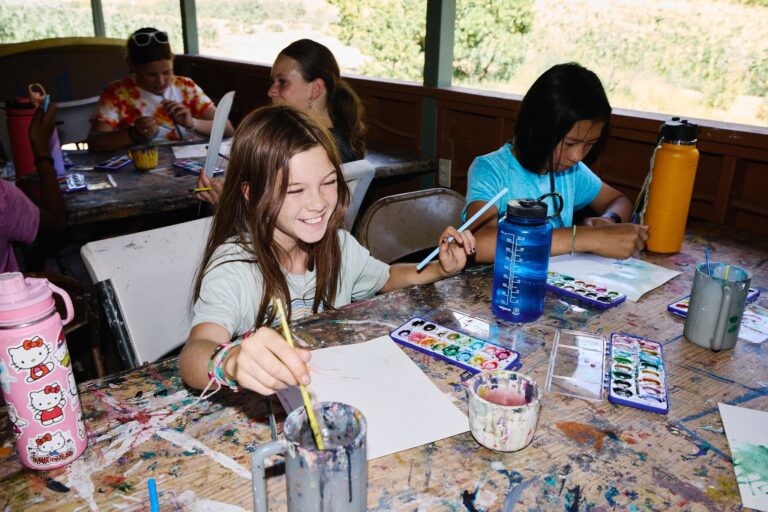
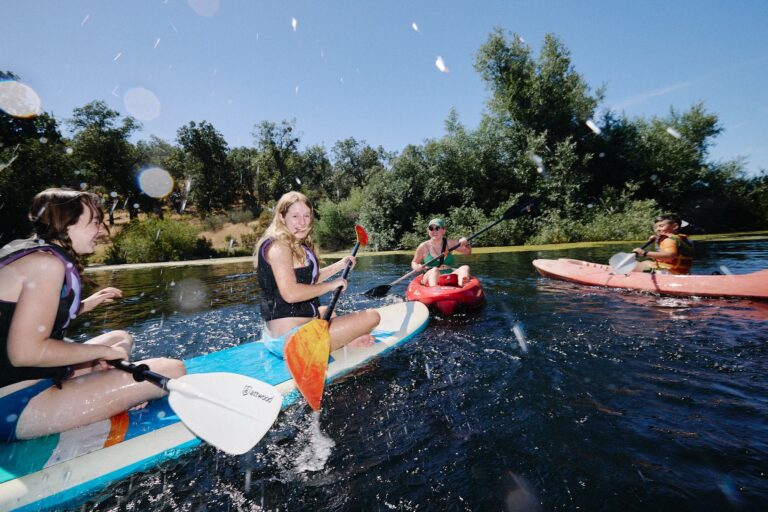
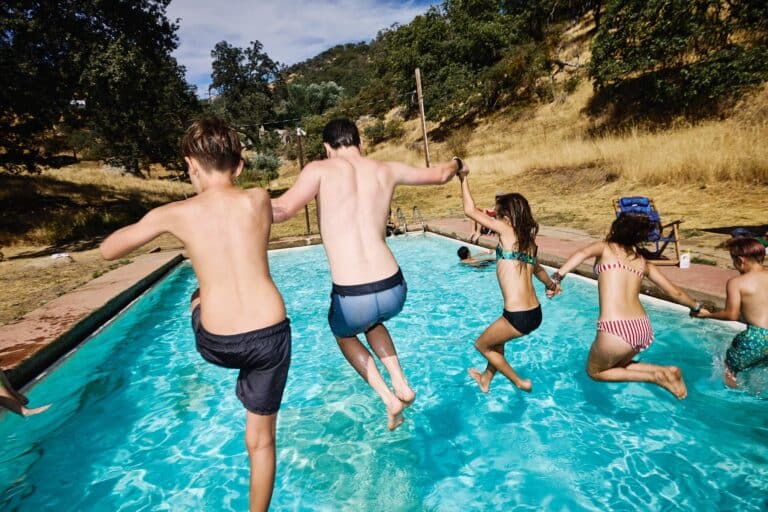
JRC offers a wide variety of free-choice activities: campers choose from the offered activities twice a day. These include: Archery, Arts and Crafts, Canoeing, Ceramics, Fishing, Horseback Riding, Kayaking, Mountain Biking, Mountain Boarding, Pottery, Riflery, Rope Swing, Swimming, Rock Climbing, and more. Some program areas have skills levels, some do not. Riflery requires all participants to be 10 before they can participate.
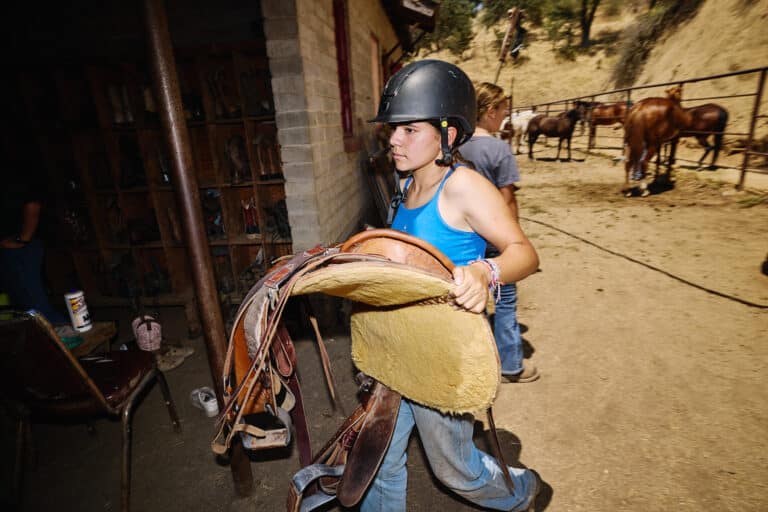
The heart of JRC is its horsemanship programming, spanning beginners through advanced equestrians. Campers develop genuine seat and hand through a structured ranch-riding curriculum that draws on a variety of horsemanship principles, progressing into indigenous-style bareback riding that demands an entirely different relationship with the horse beneath you.
The surrounding terrain makes JRC one of the premier mountain biking destinations in California’s southern Sierra, and the camp’s biking program takes full advantage. Dedicated trails range from accessible beginner routes to technically demanding descents that challenge experienced riders. For campers who want to take off-road riding in a different direction entirely, mountain boarding, think all-terrain skateboarding on grass and dirt, offers a singular thrill unavailable at virtually any other camp program in the region.
Archery at JRC goes well beyond a standard range. Campers work on form and focus at the traditional target range, then take that skill onto a mile-long walking trail lined with targets set at varying distances and angles through the ranch landscape, a genuinely immersive experience that rewards patience and precision.
Rock climbing rounds out the adventure programming, with staff-led instruction in belaying, rappelling, and fundamental movement on the property’s natural granite formations, scaling appropriately from first-time climbers to those ready for a real technical challenge.
Community as the Core
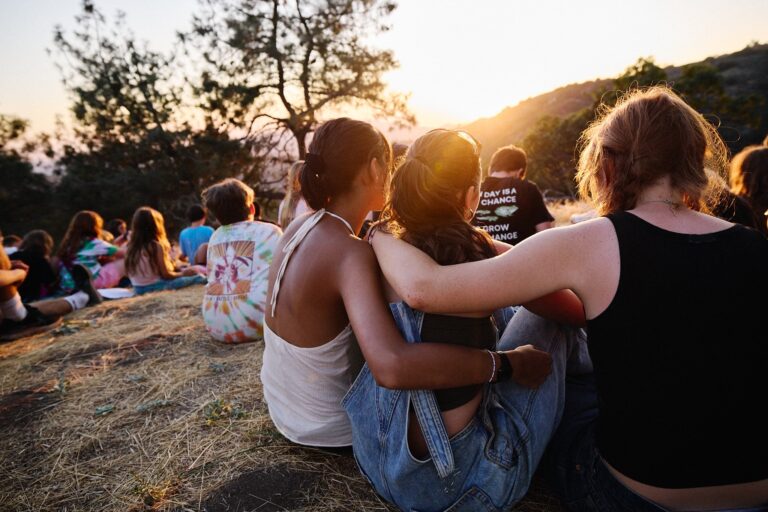
What parents often don’t anticipate, and what campers remember longest, is not any single activity but the quality of belonging that JRC produces. In an era when young people are more digitally connected and more socially isolated than at any point in history, JRC offers something genuinely countercultural: a small, close-knit community where every person is known, every contribution matters, and nobody disappears into a screen.
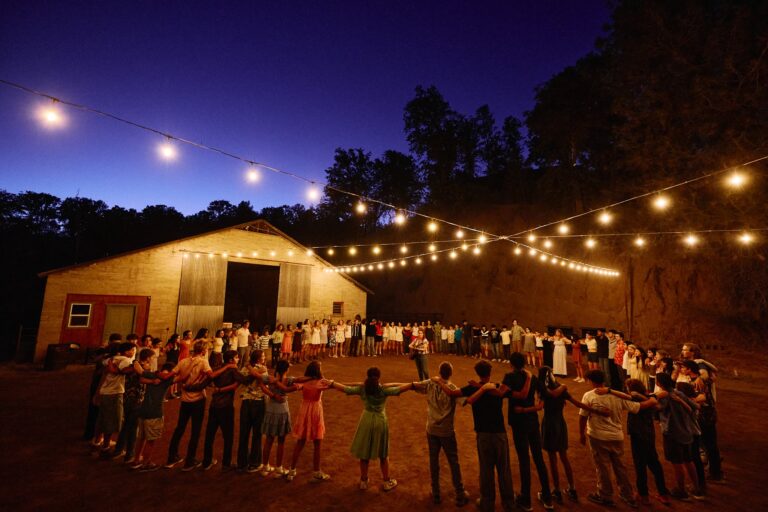
The smallness of JRC is a feature, not a limitation. Campers eat together, work together, and navigate the rhythms of ranch life side by side. Older campers naturally mentor younger ones, not as a formal program but as an organic expression of a culture that has been passed down across generations since 1934. Evening programs, campfire traditions, and the unhurried cadence of ranch days create conditions for genuine conv
Information
- Camp Type: Overnight
- Founded: 1934
- Gender: Coed
- Ages: 6 to 17
- Phones: No phones
- Activity Choice: Yes
- Capacity: 85
- Camper to Staff: 4:1
- Religion: Non-Religious
- Accreditation:
- ACA
- Western Association of Independent Camps
- Affiliation: Independent
Activities
- CIT Program
- Gardening
- Arts and Crafts
- Ceramics
- Archery
- Boating
- Fishing
- Hiking
- Horseback Riding
- Kayaking
- Other Sports
- Riflery
- Rock Climbing
- Skateboarding
Jameson Ranch Camp :
Frequently Asked Questions:
Do you ever get campers from other states or countries?
Yes, we do! When campers come from out of California, we help arrange transportation to JRC for them. We can arrange pickup at LAX or BFL, though there may be an additional transportation cost for LAX. We have had campers from all over, Panama, Germany, Iceland, Italy, China, Canada, and Russia.
What does screen-free mean at Jameson Ranch Camp?
Screen-free at JRC isn't a policy we enforce; it's the environment we've operated in since 1934. Our ranch sits at 5,000 feet in California's Sierra Nevada, where there is no cell service and no Wi-Fi. There are no televisions, computers, or gaming devices anywhere on the property. Everyone, campers, counselors, and most of the directors, sleep outdoors on sleeping porches under the stars. Our bathrooms are outhouses, and our showers are solar-powered and open to the sky. Rather than removing technology from a conventional camp setting, JRC was built around a way of life that never included it. Campers spend their days riding horses, tending the garden, climbing rocks, swimming, fishing, and contributing to the daily work of a self-sustaining ranch community. The result isn't deprivation, it's immersion in a world so full of real, hands-on experiences that screens simply have no place in it.
Can my child bring a phone to camp?
No. Phones, tablets, laptops, gaming devices, any device that allows game play, and smartwatches are not permitted at Jameson Ranch Camp. This isn't a new rule; it's the way JRC has operated for over ninety years. There is no cell service or available Wi-Fi, so a phone would have no function here beyond being something to lose or worry about. Parents communicate with campers through daily one-way email (you can email your child daily, and messages are printed and delivered) and through old-fashioned mail; campers write letters home on Tuesday mornings with paper and stamps they bring from home. We post one photo per day to Instagram so families can see camp in action. Our medical staff is on-site around the clock, and with only 85 campers per session, our staff knows every child by name. If there is ever an emergency, we will contact you immediately by phone. The independence that comes from being truly unreachable, from living fully in the present without one foot in the world back home, is one of the most transformative parts of the JRC experience.
How do children adjust to being without their phones?
Faster than you'd expect. In our experience, and we've been watching kids arrive at this ranch for nine decades, the adjustment period is remarkably short. Most campers have moved past any discomfort within the first 24 to 48 hours. What replaces the phone isn't a void. It's an avalanche of new experiences. By the time they've fed chickens before breakfast, chosen their first activity, eaten lunch with their cabin group, and fallen asleep under the stars, the phone has become an afterthought. The kids who arrive most anxious about being disconnected are often the ones who, by the end of two weeks, tell their parents they didn't miss it at all. What we consistently observe is that once children stop documenting and performing their experience for an audience, they actually start living it. They make eye contact. They get bored and then get creative. They have conversations that last longer than a text thread. Developmental psychologists describe this as the shift from extrinsic to intrinsic engagement, and it's one of the most powerful things that happens at camp. We've also found that the children who struggle most aren't struggling with the absence of the device. They're struggling with the social adjustment of being away from home, which is a completely normal part of the camp experience that our staff is trained to support.
What if there's an emergency at camp?
We have a full-time medical staff on-site 24 hours a day, seven days a week for the duration of every session. With only 85 campers per session, our staff-to-camper ratio ensures that every child is known and closely looked after. We have landline telephones on the property that work reliably, and our director and medical team can reach parents immediately if a situation requires it. We also maintain detailed medical histories and emergency contact information for every camper, collected at registration. Kern County emergency services are accessible to us, and our staff holds current certifications in first aid, CPR, and wilderness response. JRC has operated safely in this remote setting since 1934, long before cell phones existed. The systems we have in place for communication and emergency response don't depend on cellular networks or internet access, which means they work every time, regardless of conditions. If your child is hurt, sick, or needs you, we will call you. That's a promise we've kept for over ninety years.
How do parents stay in touch with their child at camp?
There are three ways. First, you can send your camper a one-way email once per day through our camp communication system. Your message is printed out and delivered to your child. They don't see a screen. They hold a piece of paper. Second, there's old-fashioned mail. Campers bring paper, envelopes, and stamps from home and write letters every Tuesday morning. These letters become treasures. Many of our alumni families still have theirs decades later. Third, we post one photo per day to our Instagram account so parents can see a glimpse of camp life. We deliberately limit this to a single photo because research shows that more frequent check-ins actually increase parental anxiety rather than reducing it. This system works. It's worked for generations. And what most families discover is that the silence becomes its own gift. When your child comes home, they have stories that belong entirely to them, told in their own words, not filtered through a photo stream.
What do kids do all day without screens?
Everything. Campers choose their own activities multiple times per day from a wide range of options: horseback riding, rock climbing, mountain biking, fishing, swimming, archery, riflery, arts and crafts, kayaking, and our rope swing, which is something of a JRC legend. Beyond scheduled activities, campers contribute to the daily life of a working ranch. They have morning chores: feeding chickens, working in the garden, tending animals, and starting a fire for the outdoor oven. They eat meals made largely from food grown on the property. They participate in evening programs like campfire singing, barn dances, talent shows, and stargazing on the sleeping porches. And they have something that's become genuinely rare in childhood today: unstructured time. Time to wander down to the creek. Time to sit on a fence and talk. Time to be bored and discover what comes after boredom, which is almost always something more interesting than anything a screen could offer. Our program runs from sunrise to well past sunset, and by the time campers crawl into their sleeping bags under the stars, they're tired in the way that only a full day of real, physical, outdoor living can make you.
Is a screen-free camp right for my child?
If your child has never been away from their phone for an extended period, the idea of two weeks without it might feel daunting for both of you. That's normal, and it's actually a good sign. The slight discomfort of stepping into something unfamiliar is exactly where growth happens, and that's true for the parent as much as the child. JRC is designed for kids ages 6 through 16, and we welcome children across the full spectrum of screen habits, from kids who've grown up with limited screen time to kids who are rarely without a device. What they all have in common, by the end of their session, is a sense of pride in what they accomplished without one. We've been doing this for over ninety years and across three generations of our family. If you're unsure, I'd encourage you to call us. We're happy to talk through your child's specific needs and whether JRC is the right fit. That conversation itself is something we believe in. Voice-to-voice, person-to-person, no algorithm required.
What is the refund policy?
All monies paid beyond the initial deposit are available for refund up to May 31 of the operating year. After June 1, all tuition payments roll over to the following year and are valid for two years.
Do you ever work out trades?
Yes! We trade for medical staff, Nurses, Doctors, or Paramedics, occasional legal services, and you can always reach out to see if we want what you’ve got. We do not trade for labor.
Can I Donate to JRC?
If you would like to help ensure more campers can attend JRC, check out our Donation Page
Does JRC offer any remote programming?
JRC is always open to hosting an event at your house if you know people who’d like to talk about camp. We are also available for parenting issues or to connect people seeking services. Campers may reach out for homework assistance, especially in History. For help with college admissions, JRC recommends Caitlin Latta, a professional admissions advisor.
Do you have any camperships this summer?
Each year, JRC provides financial aid to families that may not be able to afford camp. Please contact our office if you’d like more information. This funding goes quickly, so the earlier you apply, the higher your chances of acceptance.
How old do you have to be to work at JRC?
JRC hires 17-year-old Junior Counselors who have completed a Counselor-in-Training Program. Senior Staff should be 18 years old and typically have a year of college.
When will you know the dates for next summer?
Great question! We have tentative dates for the following summer at the end of August. We open registrations every October.
Categories