
In an increasingly digital world, ensuring the safety of campers online is as crucial as their physical well-being. Our guide on safe internet practices empowers camp professionals to protect children’s digital experiences during camping. Discover essential tips on privacy control, secure browsing, and maintaining a healthy online presence for campers. Whether for seasoned tech-users or digital newcomers, these best practices ensure that campers enjoy educational and recreational internet use in a secure environment. Equip your camp with the knowledge to maintain digital safety and provide peace of mind to parents and guardians.
Brief Overview
Ensuring digital safety at summer camps is vital as they increasingly integrate technology into their activities. Our guide empowers camp professionals to protect children’s online experiences by offering essential tips on privacy control and secure browsing. By implementing robust strategies, engaging interactive workshops, and fostering open dialogue, camps can create a secure atmosphere that reassures families. Involving parents with tips and resources extends support beyond camp, promoting responsible digital habits. SummerCamps.com is dedicated to providing the guidance needed for a safe online journey, ensuring peace of mind for parents and enriching campers’ experiences with technology. We have an extensive list of partnered technology camps available here. Get partnered with us today to display your listing!
Key Highlights
- Safe internet practices at camps blend digital and outdoor activities, boosting trust among parents.
- Implementing security measures mitigates risks like cyberbullying and maintains a secure digital environment.
- Content filters and secure networks are essential for protecting campers from cyber threats.
- Interactive workshops and open dialogues enhance campers’ digital literacy and safe online behavior.
- Engaging families in digital safety extends protection beyond camp, reinforcing positive habits.
Understanding the Importance of Internet Safety at Summer Camps
Internet safety at summer camps is crucial as more camps integrate digital tools into their activities. It ensures that campers can enjoy both tech and outdoor fun without compromising their safety. Safe internet practices for campers include monitoring their online activities and educating them about potential risks. By fostering a safe digital environment, camps can enhance the trust parents place in them. According to CISA, children present unique security risks online due to their natural curiosity and trust, which is why teaching digital safety fundamentals early on is so important.
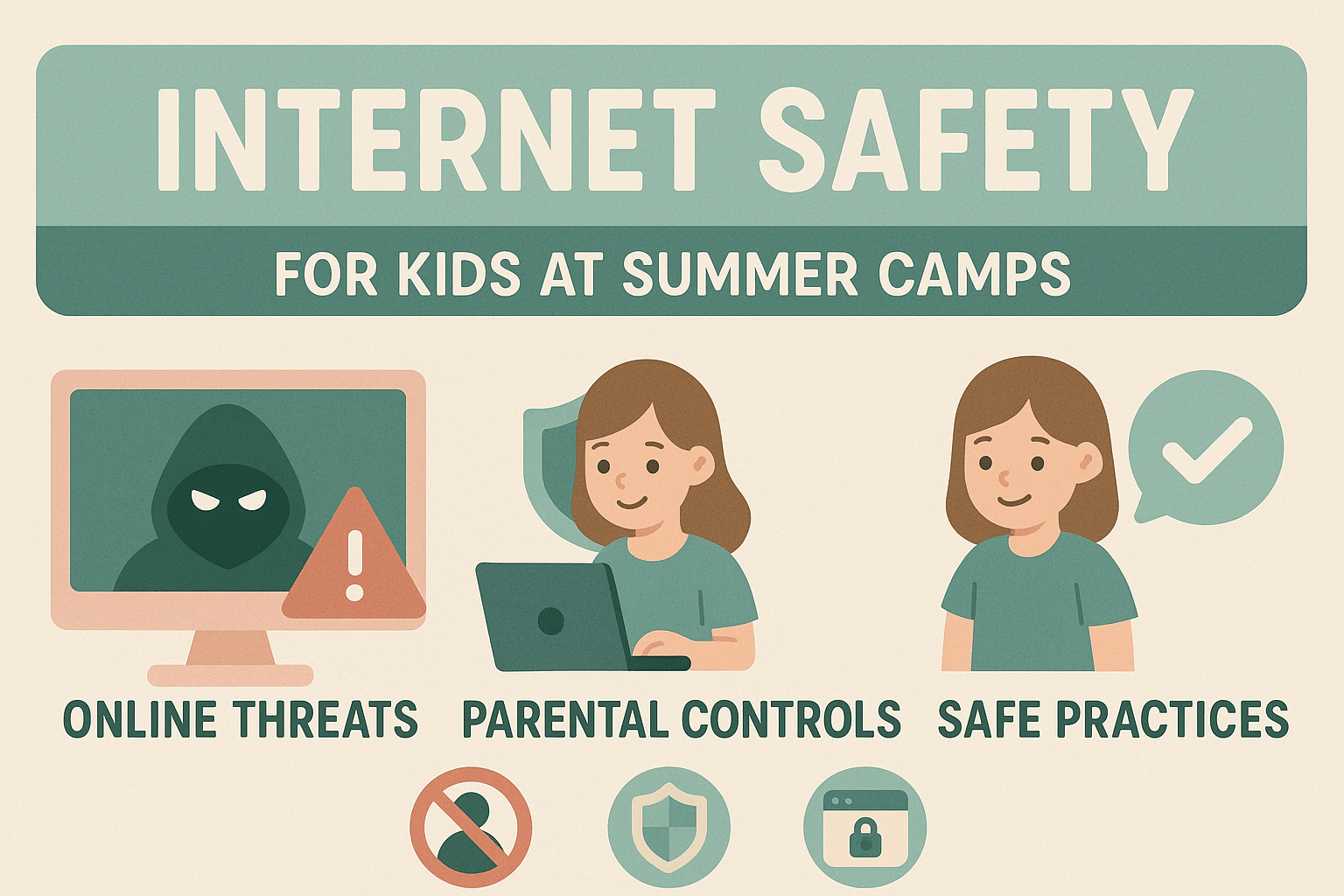
Risks and Challenges in a Digital Camp Environment
Campers in a digital environment face several risks like cyberbullying, exposure to inappropriate content, and privacy breaches. It’s essential for camp professionals to implement robust security measures to mitigate these challenges. Educating campers about safe internet practices helps in promoting awareness about threats. Camps are now incorporating tech into their unique programs, but this blend of digital and nature requires strict oversight. Ensuring online safety protocols can significantly reduce risks and foster a secure setting for camp adventures.
How Safe Browsing Aligns with Fun Camping Activities
Safe browsing seamlessly complements the traditional camping experience, creating a wholesome environment where kids can explore diverse activities. Camp programs often integrate learning through technology, making internet safety vital. By encouraging safe internet practices for campers, camps ensure that digital tools can be used responsibly. Integrating digital learning with outdoor adventures not only enriches experiences but also prepares children to handle technology wisely. As camps enhance their activities with tech, keeping activities safe and fun remains a priority.
| Key Aspects | Common Risks | Safety Measures | Benefits |
|---|---|---|---|
| Device Usage Policies | Excessive screen time | Establish clear device guidelines | Encourages outdoor activities |
| Online Privacy | Data breaches | Use secure networks | Protects camper information |
| Social Media Interactions | Cyberbullying | Monitor online activity | Promotes positive communication |
| Content Filtering | Exposure to inappropriate content | Implement content filters | Ensures safe browsing |
This table highlights how integrating digital safety enhances the overall camping experience and builds parental trust.
Key Strategies for Implementing Digital Safety Measures
To ensure a secure digital environment at camp, implementing robust strategies is essential. Establishing well-defined access policies and employing effective content filters are vital components. These measures not only protect campers from cyber threats but also create a harmonious blend of digital safety and traditional camp fun. By being proactive, camps can foster a secure atmosphere that reinforces parental trust and cultivates campers’ responsible online behavior. Let’s explore how these strategies can be effectively put into place to safeguard your camp’s digital environment.
Creating Access Policies for Campers and Staff
Developing clear access policies is a crucial first step in maintaining digital safety at camps. These policies should define what devices are allowed, who can access the internet, and under what conditions. By clearly outlining roles and responsibilities, both campers and staff are aware of acceptable behaviors, reducing the risk of digital mishaps. Engaging both campers and staff in creating these guidelines can foster a sense of ownership and accountability, ensuring everyone is on the same page and committed to maintaining a safe digital environment.
Using Content Filters and Secure Networks to Protect Campers
Content filters and secure networks are indispensable in shielding campers from inappropriate material and cyber threats. These tools can block access to unsuitable websites and prevent potential security breaches. Installing a secure Wi-Fi network ensures that campers have a safe browsing experience, reducing the risk of cyberbullying or exposure to harmful content. Regularly updating these systems is also crucial to keep up with evolving digital threats. This proactive approach provides peace of mind to parents, knowing their children are protected even while engaging with technology during their camp experience.
Training Campers and Staff on Safe Internet Practices
Training both campers and staff on safe internet practices is pivotal in today’s tech-driven camping experiences. By equipping everyone with the knowledge to navigate the online world safely, camps can mitigate risks like cyberbullying and phishing scams. Interactive workshops and open dialogues about digital behaviors not only enhance understanding but also foster a community of trust and awareness. Let’s delve into effective methods that promote an informed and responsible online environment, ensuring that campers get the best of both digital and outdoor adventures.
Interactive Workshops and Resources for Digital Literacy
Interactive workshops provide a hands-on approach to teaching digital literacy, empowering campers and staff with essential online safety skills. These workshops often include simulated online scenarios, guided discussions, and role-playing activities that encourage active participation and engagement. Campers learn to identify suspicious activities, handle privacy settings, and use digital tools responsibly. Making these sessions fun and relatable ensures that the crucial lessons stick, paving the way for a digitally safe and enjoyable camping experience. Resources such as handouts, videos, and online tutorials complement these activities by providing ongoing educational support.
Encouraging Open Dialogue About Online Behaviors
Creating a safe digital space starts with encouraging open dialogue about online behaviors. Campers are more likely to adhere to safe practices when they understand the potential consequences of their actions and feel comfortable discussing their online experiences. Regular group discussions led by experienced facilitators can help campers express their concerns, share personal experiences, and learn from one another. This approach fosters a culture of transparency and accountability, ensuring that everyone is informed and vigilant about internet safety. Open discussions also provide an opportunity for camp professionals to address any misconceptions and reinforce safe online habits.
Monitoring and Updating Online Safety Protocols
Ensuring the digital safety of campers is an ongoing process that requires constant vigilance and adaptation. By regularly monitoring online safety protocols and making necessary updates, camps can better protect campers from emerging threats. This involves not just setting protocols but continuously refining them through regular reviews and feedback loops. These efforts help in preparing both campers and staff for any digital safety challenges they might encounter, thus maintaining a secure and trusted camp environment.
Regular Reviews and Simulations to Ensure Preparedness
Regular reviews of online safety protocols are fundamental in identifying potential vulnerabilities and addressing them proactively. By conducting thorough simulations, camp staff can practice responding to hypothetical digital threats in a controlled environment, ensuring they’re well-prepared for any real-life incidents. These exercises help in fine-tuning safety measures and keeping protocols relevant as technology evolves, aligning with the camp’s goal of maintaining a safe digital landscape for all its participants.
Feedback Loops for Continuous Improvement in Protocols
Establishing feedback loops allows camps to refine their internet safety protocols through constructive insights drawn from both campers and staff experiences. Regularly soliciting feedback on what works and what doesn’t enables camps to adapt safety measures to meet the actual needs of their community. This collaborative approach ensures that all voices are heard, fostering a culture of continuous improvement and empowering campers to participate actively in their own digital safety. Camps can then adjust protocols more accurately, reinforcing confidence in their comprehensive safety strategies.
Engaging Families in Cyber Safety for a Safer Camp Experience
In today’s digital world, engaging families in cybersecurity discussions is crucial for ensuring a safe camp experience. By involving parents, camps can extend the learning and safety protocols beyond camp boundaries. This engagement not only strengthens the online safety net for campers but also empowers families to support digital safety efforts. Together, camps and families can cultivate an environment where campers are informed, vigilant, and aware of best online practices. Such a cooperative approach helps in developing a unified strategy to enhance digital safety and bolster camper confidence in a tech-integrated camp setting. Learning to navigate the internet responsibly is just one part of the tech camp experience as campers also develop critical teamwork skills from tech camps that prepare them for future collaboration in digital environments.
Providing Parents with Tips for Supporting Their Children’s Digital Safety
Parents play a vital role in ensuring their children’s safety online. Equipping them with practical tips can reinforce the digital safety measures established at camp. Encourage parents to have ongoing conversations about online behavior and potential cyber threats. Suggest setting up parental controls and monitoring app usage to keep track of what their children are accessing. By fostering open dialogue and maintaining active involvement, parents can aid in reinforcing positive digital habits cultivated at camp. This two-way communication ensures children understand the importance of being cautious and responsible while navigating the digital landscape.
Collaborative Tools and Resources for Continued Education
Camps can empower both families and campers by providing access to collaborative tools and educational resources. Utilize online platforms that offer interactive e-learning materials focused on cyber safety to encourage self-paced learning. Share resources like webinars, guides, and toolkits that assist families in staying informed about the latest digital safety tips and trends. This equipped approach ensures that cybersecurity education continues even after camp, fostering lasting awareness. Encourage feedback and discussions via online forums to create a community that actively participates in safeguarding against digital threats.
Embracing safe internet practices is crucial for a rewarding and secure camping experience, especially in today’s digital age. By staying informed, implementing robust online security measures, and encouraging open discussions about digital safety, campers can confidently enjoy their time while minimizing risks. SummerCamps.com is committed to providing families with the essential resources and guidance needed to ensure campers remain protected online. For more invaluable insights and detailed guides on ensuring a safe internet journey for your child this summer, download our comprehensive guide today and take the first step toward digital safety.
Why is digital safety important at summer camps?
In today’s digital world, many camps integrate technology into their activities. Ensuring digital safety is crucial as it allows campers to enjoy tech and outdoor fun without compromising their well-being. Safe internet practices enhance the trust parents place in camps, knowing their children are protected.
What risks do campers face in a digital environment?
Campers can encounter risks such as cyberbullying, exposure to inappropriate content, and privacy breaches. Implementing robust security measures helps mitigate these challenges and promotes a safe online experience.
How can camps ensure a safe digital environment for campers?
Camps can ensure a secure digital environment by establishing clear access policies, employing content filters, and maintaining secure networks. These measures help protect campers from cyber threats while allowing for responsible use of digital tools.
How can interactive workshops improve campers’ digital literacy?
Interactive workshops provide hands-on learning experiences where campers can engage in simulated online scenarios, guided discussions, and role-playing. This helps them learn to navigate the internet safely, boosting their confidence and understanding of digital safety.
What role do parents play in ensuring digital safety at camp?
Parents play a crucial role by supporting digital safety measures beyond camp. Encouraging open dialogue about online behavior, setting parental controls, and staying informed helps reinforce positive habits cultivated at camp, ensuring a safe experience for children.