
Choosing the right summer camp for your child can seem like a daunting decision, especially when deciding between public and private options. According to Templeton, camps foster independence, resilience and strong social bonds. Each type of camp offers unique benefits and caters to different needs and preferences. While public camps typically boast affordability and diverse interests, private camps are renowned for specialized programs and personalized attention. Understanding these differences can help you make an informed decision that aligns with your family’s values and your child’s interests. Dive into this overview to explore significant distinctions and ensure an engaging and enriching summer experience for your child.
Brief Overview
Choosing between public and private summer camps involves understanding each option’s unique offerings and costs. Public camps focus on affordability and inclusivity, making them accessible to families with various budgets, while fostering diverse community engagement. Private camps, on the other hand, are renowned for specialized programs and state-of-the-art facilities, providing individualized attention and fostering deeper connections. Whether your child prefers a broad range of activities or specialized programs in STEM, arts, or sports, exploring available options can ensure a fulfilling camp experience. Utilize our comprehensive directory to compare choices and find the perfect fit for your family’s needs.
Key Highlights
- Public camps offer affordability and inclusivity, often funded by government or community contributions.
- Private camps provide specialized programs with personalized attention and state-of-the-art facilities.
- Public camps feature a diverse range of activities, while private camps cater to niche interests.
- Key considerations for parents include location, safety policies, and camp reputation.
- SummerCamps.com simplifies the search with directories categorizing camps by interest, ensuring a perfect fit.
Understanding the Core Differences: Public vs. Private Summer Camps
Choosing the right summer camp for your child can feel daunting, especially when weighing options between public and private camps. Public camps are often more accessible and budget-friendly, while private camps typically offer specialized programs and facilities. Each type of camp caters to different needs, enabling children to thrive and explore new interests. This guide explores the core differences between public and private summer camps, focusing on funding, accessibility, and the range of programs offered. As you delve into these elements, you’ll be better equipped to select the perfect camp environment for your child’s summer adventure.
Funding and Accessibility: Who They Serve
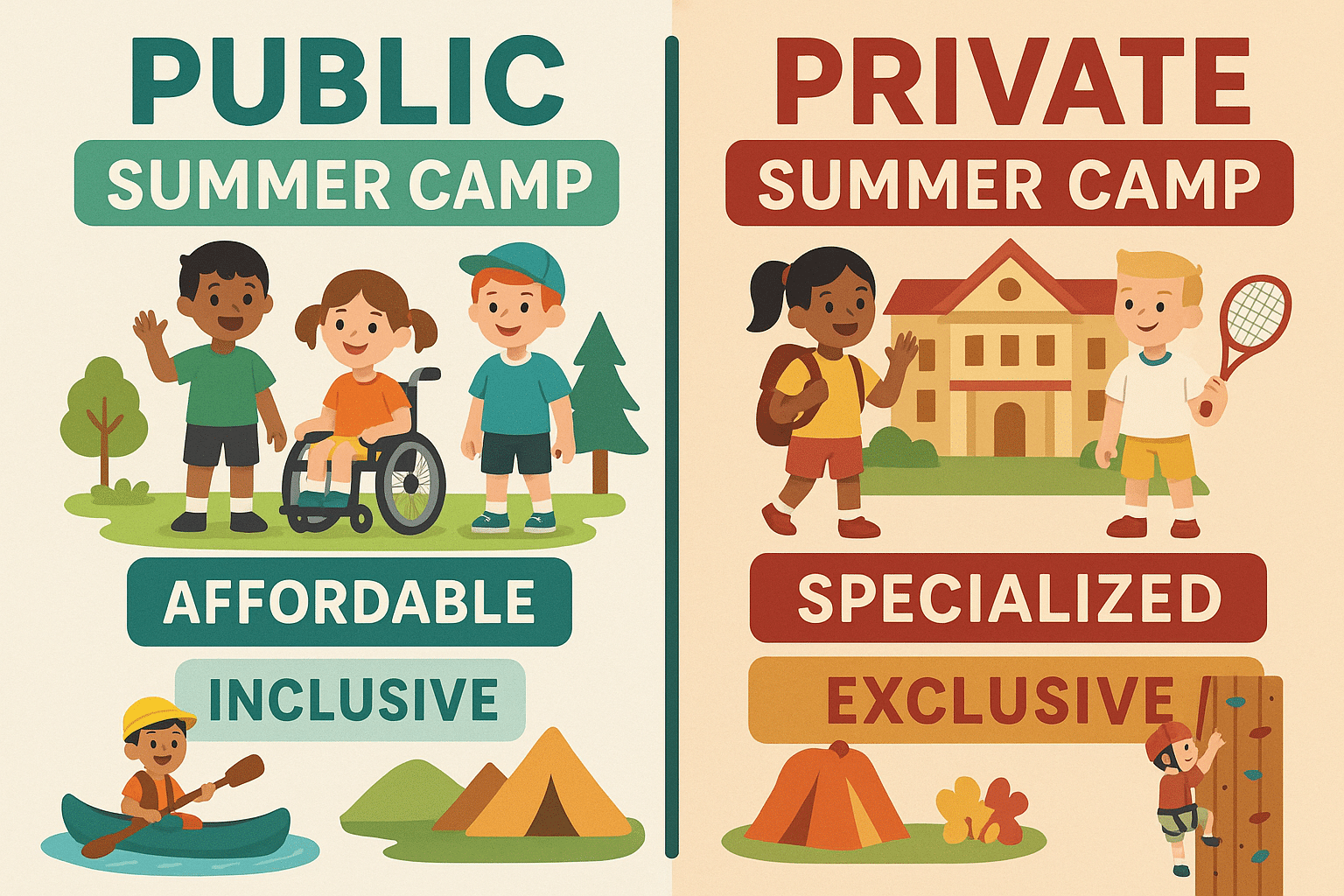
Public summer camps are generally funded by government resources or community donations, which makes them more accessible to a broad audience. These camps are designed to be inclusive, often offering reduced or sliding-scale fees, ensuring that children from various socio-economic backgrounds can participate. On the other hand, private camps rely on fees paid by the campers’ families, which can make them more expensive. However, this funding model allows private camps to offer unique advantages, such as smaller group sizes and more personalized attention. When exploring your options, consider visiting SummerCamps.com for a comprehensive directory of choices tailored to your needs.
Program Variety and Specialized Offerings
Program variety is a significant factor in choosing between public and private summer camps. Public camps usually feature a wide range of activities, from sports to educational workshops, that aim to foster a broad skill set in attendees. Conversely, private camps often boast specialized programs, focusing on niche interests like advanced STEM, arts, or specific sports training, designed to cater to children with particular passions. This specialized approach allows children to enhance their skills in a targeted environment. Whether your child is exploring new interests or diving deep into a beloved activity, both public and private camps offer abundant opportunities for growth and enrichment.
Benefits of Public Summer Camps for Your Child
Public summer camps present a host of benefits that make them an appealing choice for families looking to enrich their children’s summer experiences. These camps prioritize affordability and inclusivity, ensuring that a wide array of participants can engage in a diverse range of activities. With their community-centered approach, public camps not only foster a strong sense of belonging but also nurture children’s growth through varied programs. By understanding the unique advantages of public summer camps, parents can make informed decisions that support their children’s developmental needs and summer enjoyment. To explore why local, community-based programs are so valuable for families, visit our guide on the benefits of community center camps.
Affordability and Inclusivity
One of the primary attractions of public summer camps is their affordability. These camps are often subsidized by government entities or community-driven initiatives, allowing them to offer programs at a cost-effective rate or even at reduced fees based on family income. This financial model makes public camps accessible to families from different economic backgrounds, removing financial barriers to participation. Additionally, public camps emphasize inclusivity, creating a welcoming environment for children of diverse backgrounds. This inclusivity enriches the camp experience by exposing children to various cultures and perspectives, fostering empathy and understanding among campers.
The Unique Advantages of Private Summer Camps
Private summer camps stand out for their distinctive offerings, providing enriching experiences that cater to individual interests and needs. These camps are known for their exceptional facilities and ability to offer personalized attention thanks to smaller camper groups. Such environments foster deep connections with peers and counselors, enhancing the overall camp experience. Additionally, private camps often feature state-of-the-art amenities and specialized programs in arts, sports, and STEM, empowering children to pursue their passions with dedicated resources. Exploring private options might open doors to unique summer adventures for your child, blending fun and growth seamlessly.
Individualized Attention and Facilities
One of the standout features of private summer camps is the individualized attention that campers receive. With lower camper-to-counselor ratios compared to public camps, private camps create an environment where personal growth is nurtured through dedicated mentoring. This allows counselors to get to know each child, providing tailored support and encouragement that can significantly enhance the camper’s confidence and skills. Additionally, the facilities at private camps often have a cutting-edge advantage, equipped with advanced technology, art studios, and specialized sporting equipment. Such resources not only ensure a safe and enriching environment but also provide campers with opportunities to excel in their areas of interest. This approach not only enhances their summer experience but also lays a solid foundation for future pursuits.
| Advantage | Description | Impact on Campers |
|---|---|---|
| Personalized Attention | Smaller camper-to-counselor ratios ensure individual focus on each child. | Enhanced personal growth and tailored support for individual needs. |
| Superior Facilities | State-of-the-art amenities, providing a wide range of activities. | Exposure to new activities and opportunities for developing diverse skills. |
| Distinct Benefits | Exclusive programs and activities not found in public camps. | Unique experiences that encourage independence and creativity. |
This table captures the core advantages of private summer camps, illustrating how their distinct features contribute to enriching camper experiences.
Finding the Right Fit: Key Considerations for Parents
Choosing the right summer camp requires understanding unique factors that meet your child’s needs. It’s vital to consider the camp’s location, safety policies, and overall reputation. These elements can dramatically impact your child’s camp experience, influencing everything from comfort to security and growth opportunities. Parents should evaluate these considerations thoroughly and reflect on previous insights about public and private camp differences. By doing so, you’ll be better prepared to find a camp that not only aligns with your child’s interests but also ensures a safe and enjoyable summer experience.
Location, Safety, and Reputation
When it comes to summer camps, location plays a crucial role in your decision. Opt for a camp that’s conveniently located, whether near your home or in a desired environment for your child. Assess the camp’s safety measures, such as counselor-to-camper ratios, emergency protocols, and background checks for staff, to ensure a secure setting. Additionally, it’s essential to research the camp’s reputation. Gather insights from reviews, testimonials, and community ratings. A camp known for high-quality programs and positive experiences is more likely to offer enriching adventures, giving you peace of mind while your child explores new horizons.
How Our Directory Helps Simplify Your Search
Finding the right summer camp for your child can feel overwhelming with so many choices out there. Thankfully, our directory at SummerCamps.com aims to simplify this process by offering a comprehensive list of top-rated camps across the United States. Whether you’re searching for a camp that aligns with your child’s interests in STEM, arts, or sports, our platform makes it easy to compare different options. By categorizing camps and providing detailed descriptions, our directory helps you make an informed decision, ensuring your child enjoys a fulfilling and fun-filled summer.
Comparing Camps Based on Your Child’s Interests
When selecting a summer camp, aligning with your child’s unique interests is crucial to ensuring a rewarding experience. Our directory categorizes camps by various programs such as STEM, arts, sports, and more, simplifying the process of finding the right fit. For the young scientists in your family, our list of STEM camps focuses on innovation and exploration, providing hands-on experiences that ignite curiosity. Artistic children might prefer art camps offering workshops in visual arts or drama, nurturing their creative spirit. Sports enthusiasts will find options that range from soccer to swimming, helping them develop skills and teamwork in a fun environment. For a closer look at what kids actually do during overnight programs, check out our article on activities at overnight camps, which highlights common schedules, traditions, and camper favorites.
Deciding between public and private summer camps is a personal journey that depends on your child’s interests, your budget, and your desired level of personalization. Public camps often offer a diverse community feel and affordability, while private camps typically provide tailored experiences and exclusive facilities. Both can provide transformative summer experiences that foster growth and friendships. Assessing your family’s unique needs and goals will help ensure you choose the camp that aligns with your child’s passions and your family values. Start exploring today to secure a spot and embark on a summer of adventure and learning.